Conditions and Costs of Time Reversal
The Night CleanerThe conditions and costs of time reversal define the story’s final bargain: a chance to undo the devastation of the war, purchased with divine blood, Asher’s magic, Draco’s immortality, and the possibility that restored loved ones will no longer remember their shared past. The ritual can return the world to before the conflict began, but it cannot guarantee that the people brought back will return unchanged in memory or circumstance. Its aftermath offers a second chance rather than a simple restoration.
Requirements and Scope
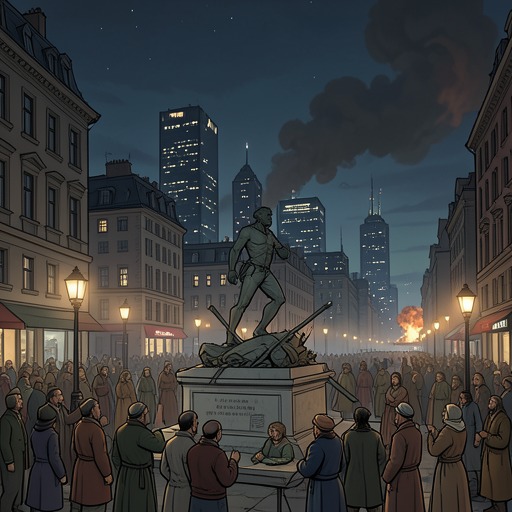
Phillip proposes that time can be turned back through a combination of blood and magic. He explains that Dorian and Draco carry the blood of the ancient Greek gods themselves, whereas others merely host divine powers. With Asher’s help, that distinction makes the reversal possible: the brothers’ blood and Asher’s magic can send events back to before Rose entered Draco’s life, before Esme and Dorian became involved, or before the war began. The plan is framed as a return to an earlier point in history, not merely a means of repairing one isolated loss.
Asher’s uncertain place in visions of the future is part of why the possibility has remained obscure. Phillip says he can sometimes see Asher and sometimes cannot, and connects that inconsistency to an earlier, in-depth conversation with him about magic and his people. Phillip speaks confidently about the proposed method, but the account registers that the explanation is incomplete: Dorian asks what the catch is, voicing a concern that the narrator also feels. The solution’s limits emerge only when that question is put directly.
The Price of Reversal
The clearest cost is Draco’s mortality. Dorian is told that reversing time will make Draco mortal, and the possibility immediately gives the proposed rescue a personal cost beyond the loss of accumulated history. Draco accepts that consequence: immortality has become a burden after what he has endured, and he does not want to outlive Rose. His willingness to surrender it places a finite life, shared with the people he loves, above an endless one without them.
Memory is the other major uncertainty. The people brought back might not remember the months that have passed; Phillip later clarifies that people without gifts remember nothing, while gifted people’s memories vary—some remember and some do not. The reversal therefore restores a past without promising a common account of it. For those who retain their memories, the intervening war remains part of their experience; for others, that period is absent. The distinction makes the cost communal as well as intimate, since no one can assume that a returned friend or partner will recognize the history they shared.
Ritual and Execution
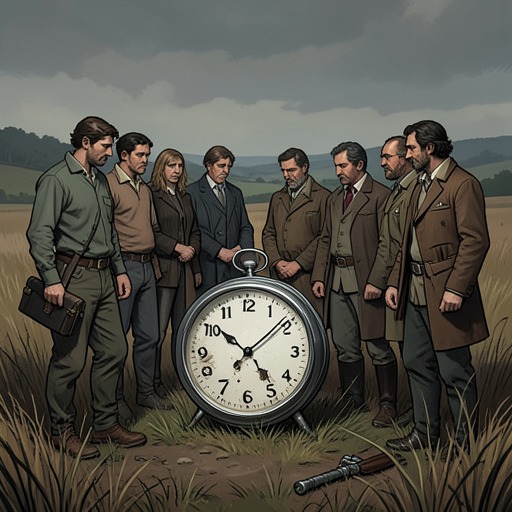
Asher warns that the process will be difficult, drawing on legends that describe it as a severe ordeal. The practical method centers on Dorian’s sword, which lies on the ground after Phillip has pulled it from Draco’s chest. Asher takes up the weapon and begins an invocation calling on time and space, then asks for the energy of the human race and invokes the sun, stars, and moon as keepers of time. The language makes the act more than an exercise of individual power: it appeals to cosmic forces and humanity together.
The ritual joins the three required elements through blood. Asher names the blood of a human, a god, and an immortal, cuts his own hand, and brings the sword into contact with the blood of Dorian and Draco. Their mingled blood becomes the focus of the spell. Asher then invokes the keepers of time and space again, traces a line of the past, and drives the sword into the ground where the blood has gathered. Phillip and Echo have to move farther away as the wind and lightning intensify. The ritual’s scale is visible in the destruction around them, while its decisive act remains the joining of blood, weapon, and spoken spell.
Consequences in the New Timeline
After the reversal, the characters arrive in Seahill one year before Dorian left the city in chaos. There is no duplicate Draco in that time: he and his earlier body have merged, so the return does not create an encounter with himself. This detail establishes a further limit on the process: it changes the characters’ place in time without leaving a second version of Draco alongside them.
The return also leaves memory uneven and the future open. Phillip describes the variation in what people remember, urges the group to continue with the lives they had, and proposes making the Hero Society better than before. He explicitly invites Dorian to join that effort, though Dorian does not immediately accept. The practical next steps are personal: Rose is at her apartment, Esme is working at the hospital, and Echo is on her way to her apartment. Dorian goes looking for Esme without first changing out of his clothes. Time reversal has made reunion possible, but whether the relationships can resume as they were depends on what each person remembers and what the survivors choose to do now.
Narrative Significance
The reversal is governed by a tension between return and loss. Its reach is broad enough to undo the path leading to the war, yet its costs prevent the new beginning from being a perfect restoration: Draco becomes mortal, memories may disappear, and Dorian’s place in the rebuilt Hero Society remains unresolved. Even a successful return cannot guarantee that shared experience will survive in everyone’s mind.
The rule therefore makes the ending depend on both sacrifice and choice. The characters accept a future in which immortality is surrendered and the past may be remembered differently, because remaining in the ruined timeline would deny them the possibility of reunion. Their second chance is not a promise that nothing painful happened, nor that every bond will resume automatically. It is an opportunity to live forward from an earlier point, with love and responsibility still requiring action in the altered present.